Turf conversion for Denver homes and commercial properties
Colorado Property Care provides turf removal and native seed installation across the Denver metro area. A front yard that takes more watering than you want to give it, an unused lawn beside a building or a broad strip of grass along a driveway can each call for a different plan. We work with homeowners and commercial property owners to define what comes out, what stays and how the replacement landscape will be used.
Your project can include sod removal, ground preparation, native seed installation, irrigation changes and hardscape features. The starting point is the property itself: sun, slope, soil, access and the amount of activity the area needs to handle. Bring your water district’s name to the first conversation, especially if you hope to apply for a turf replacement incentive.
Sod removal and ground preparation
Removing the visible grass is only part of the job. Before work begins, we discuss the depth and method of removal, access for equipment, disposal of removed material and protection of the features you are keeping. Existing sprinkler lines, tree roots, edging and paths all affect the work area.
The next step is preparing the ground for its new use. A seeded area needs a suitable seedbed; a path needs a base designed for that surface. Identify low spots, compacted areas and weed problems before covering them with new materials. Soil preparation and any amendments should follow the site conditions, rather than a standard recipe for every yard.
If an incentive is part of your plan, confirm the application and inspection sequence with your water provider first. Photograph and measure the existing lawn while it is still in place.
Native seed blends for Colorado properties
A seed blend should match the intended landscape. Some owners want a short, informal lawn; others prefer the texture of a meadow in a space they rarely walk through. Discuss mature height, seasonal color, mowing expectations and how the area will look beside the house or business. A product labeled “native” or “low water” is a starting point for review, not a complete planting plan.
Shortgrass and meadow options
Buffalograss and blue grama are candidates for suitable sunny sites. The choice between a single species and a blend depends on the growing conditions and the desired appearance. For a taller meadow, review the proposed species individually and decide how paths, edges and any flowering plants will fit. Confirm the blend’s actual species list with your water district if you are pursuing a rebate.
Shade, concentrated foot traffic and elevation can limit grass choices. Warm-season buffalograss greens up later in spring and turns dormant after a hard frost. It also needs supplemental water during establishment. Colorado State University Extension’s buffalograss guidance describes those tradeoffs. A native planting should be chosen for the site and maintained appropriately, rather than promised as a year-round green, maintenance-free lawn.
Hardscapes that give the space a purpose
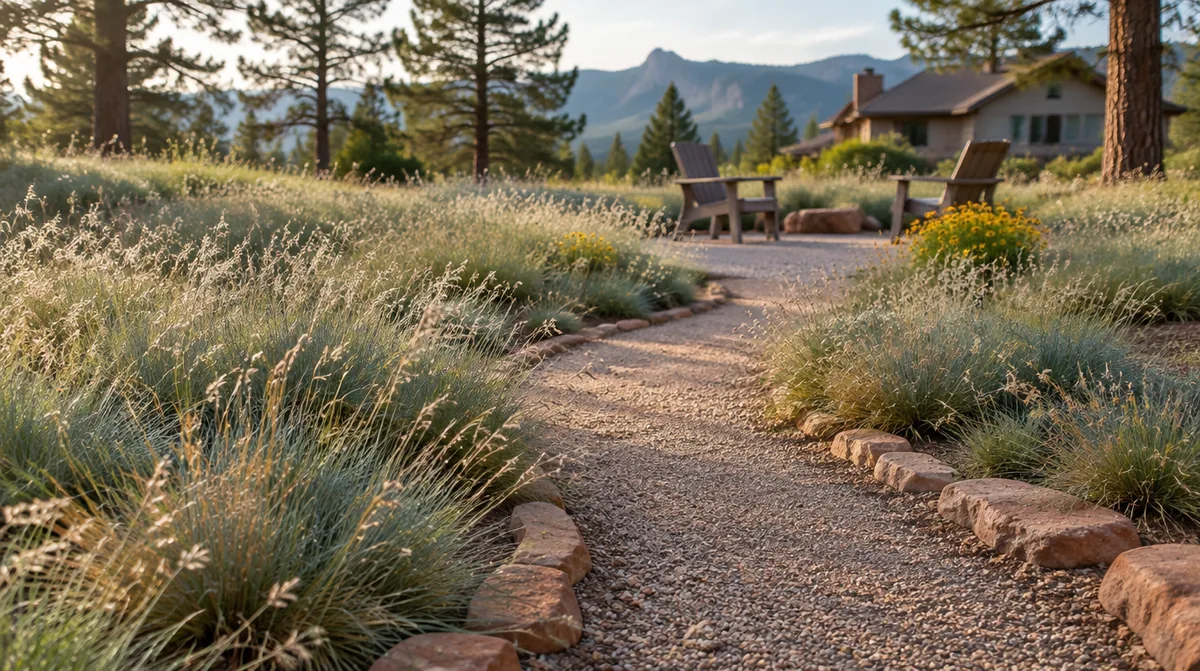
A lawn conversion can make room for a better route to the front door, a small sitting area or a defined border between planting and paving. Stone paths, gravel areas, edging and patios should be drawn into the plan before the seed goes down. That helps establish clear boundaries and avoids routing construction traffic through new seedlings.
Consider where rain and snowmelt will go, how surfaces meet the house and whether the path needs to accommodate a cart, stroller or mobility aid. Material selection, base preparation and drainage belong in the project discussion. For a larger paved feature, see our separate concrete service.
Hardscape costs and rebate eligibility are separate questions. Ask the district to review the proposed materials and living plant coverage before assuming a paved or gravel area qualifies.
Water districts and the Pinery Water Rebate Program
Incentives depend on the water provider serving your address. Check your bill rather than assuming that every property in the same town uses the same district. Ask about current funding, eligible customer types, approved replacement materials, inspections and deadlines. We can discuss the physical project scope; the district controls its rebate program.
Pinery’s published 2026 terms
Program full for 2026 — checked October 11, 2026. Pinery’s official program page lists the current status. Its 2026 guidelines offered residential customers $5 per square foot, capped at $2,000. The completion deadline was September 30, 2026. Future availability and rates are not confirmed.
- At least 100 square feet of healthy, irrigated, high-water-use planting had to be replaced.
- An application and initial District inspection were required before removal, followed by a final inspection.
- The plan required at least 50% living plant coverage at maturity and removal and capping of overhead sprinkler heads in the project area.
- Concrete, artificial turf and impermeable materials were ineligible replacements. Native seed was not automatically approved.
- Commercial customers were ineligible. HOAs had separate terms: $3 per square foot, up to $10,000.
Confirm future rules directly with Pinery before starting work or counting on reimbursement. Colorado Property Care does not issue or guarantee district rebates.
Irrigation and establishment care
The watering plan needs to serve the new planting, not simply repeat the schedule used for the old lawn. Discuss which irrigation components remain, which need modification and who will handle watering after installation. Seed selection and water management work together; CSU Extension’s turf selection guidance explains why changing grass alone does not determine water use.
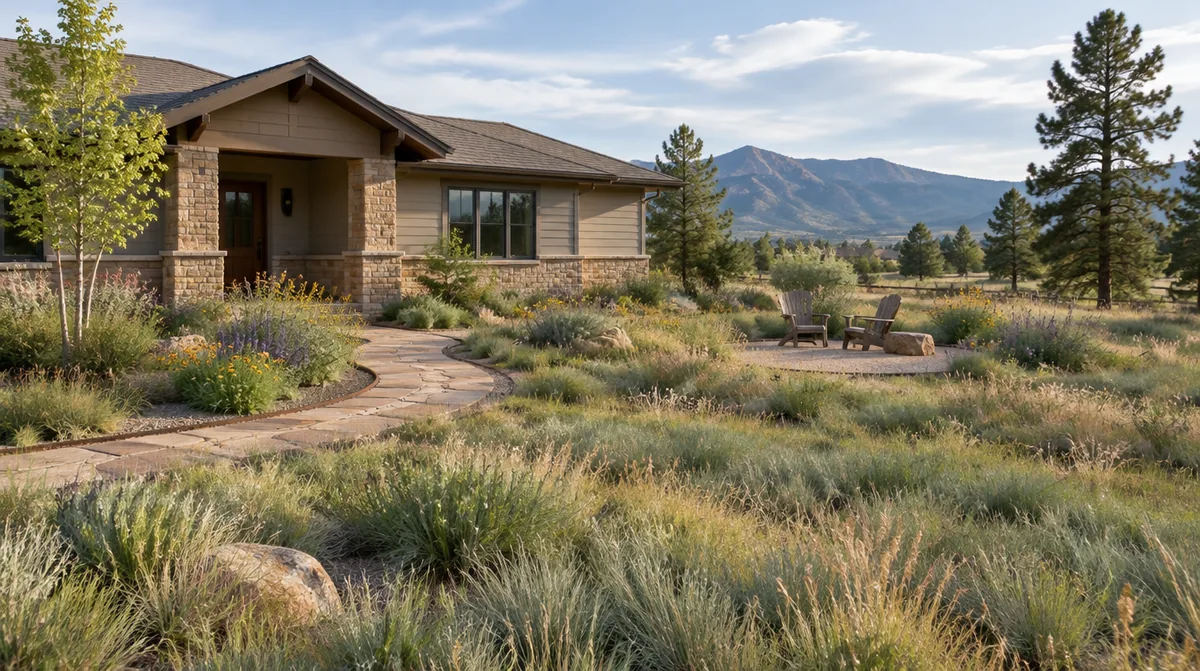
Newly seeded areas need attention while they germinate and fill in. Agree on the seeding window, watering responsibilities, protection from traffic, weed management and follow-up expectations. A concept image shows an established landscape; seed installation will not look like that on the first day.
As of October 11, 2026, Pinery’s Stage 3 drought restrictions prohibit new sod and restrict watering of newly seeded turf. Check current rules and the feasibility of establishment watering with your district before setting an installation date.
Plan your turf conversion
Send the property address or ZIP code, whether it is residential or commercial, the water provider and an approximate square footage. Include a few photographs showing the lawn, nearby structures and the route equipment would use. Tell us whether you want a native lawn, a meadow-style area or a combination of planting and hardscape.
A useful scope separates removal and hauling, ground preparation, seed and planting materials, irrigation work, hardscape construction and establishment care. Access, slope, existing weeds and the chosen materials affect the work involved. We will discuss those details before defining the project and its price.
Turf removal and native seed questions
Do I need to remove all of my lawn?
No. Start with the area you want to change and keep useful lawn where it serves your property. The design can connect the retained lawn with new planting and paths.
Can you work on commercial properties without a rebate?
Yes. We welcome residential and commercial turf conversion inquiries across the Denver metro area. A district’s incentive eligibility is separate from whether we can discuss the work at your property.
Is native seed the same as artificial turf?
No. Native seed establishes living plants. Artificial turf is a manufactured surface. This service focuses on removing existing lawn and preparing and planting a living replacement landscape.
Can I combine native seed with a new walkway?
Yes. Plan the walkway and planting boundaries together so access, drainage and construction sequence are resolved before seeding. Confirm each material’s eligibility separately if a rebate is involved.
Contact Colorado Property Care.
Colorado Property Care is a service of MRK Construction. Our listed service area includes the Denver metro area, Douglas County and Arapahoe County. Include your city or ZIP code and the turf removal & native seed installation work you need so the team can confirm coverage and scope.